Quick Answer
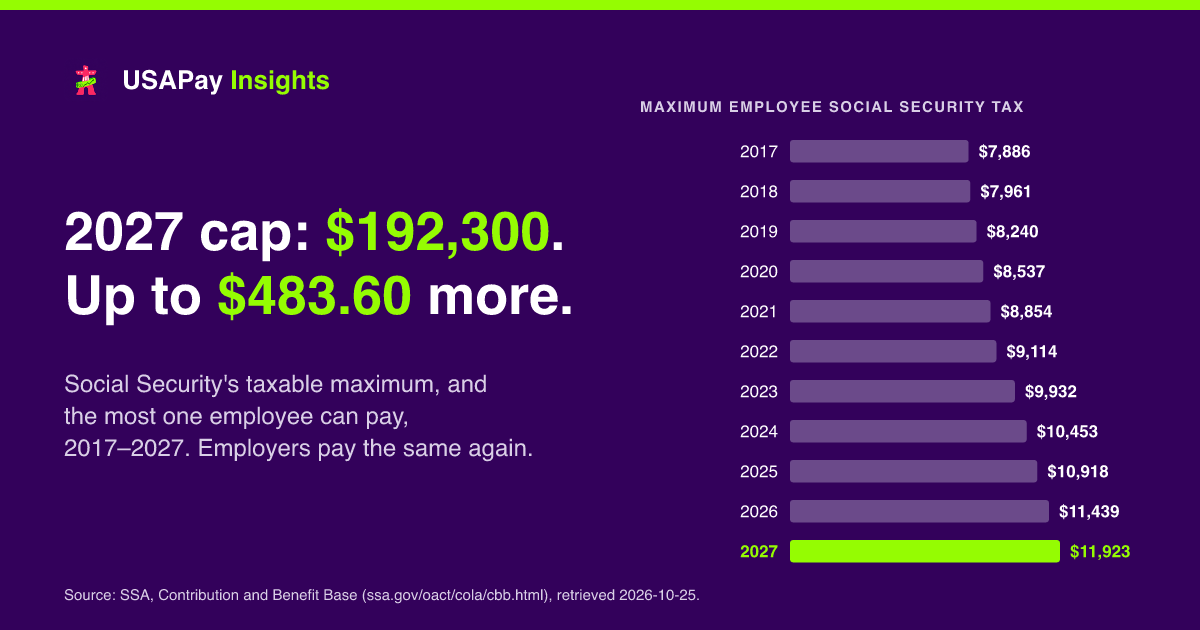
For 2026 the Social Security wage base is $184,500, up from $176,100. Workers at or above it pay $520.80 more, for a maximum of $11,439.00; anyone under $176,100 pays nothing extra.
The Social Security wage base — the ceiling above which the 6.2% tax stops — rose from $176,100 in 2025 to $184,500 in 2026. Anyone earning above the old ceiling pays more this year on exactly the same salary.
The maximum any employee can pay in 2026 is $11,439.00, which is 6.2% of the wage base. Your employer pays the same again, invisibly.
What the increase costs, by salary
| Salary | 2025 Social Security | 2026 Social Security | Increase |
|---|---|---|---|
| $100,000 | $6,200.00 | $6,200.00 | — |
| $150,000 | $9,300.00 | $9,300.00 | — |
| $184,500 | $10,918.20 | $11,439.00 | +$520.80 |
| $200,000 | $10,918.20 | $11,439.00 | +$520.80 |
| $300,000 | $10,918.20 | $11,439.00 | +$520.80 |
The one place your marginal rate falls
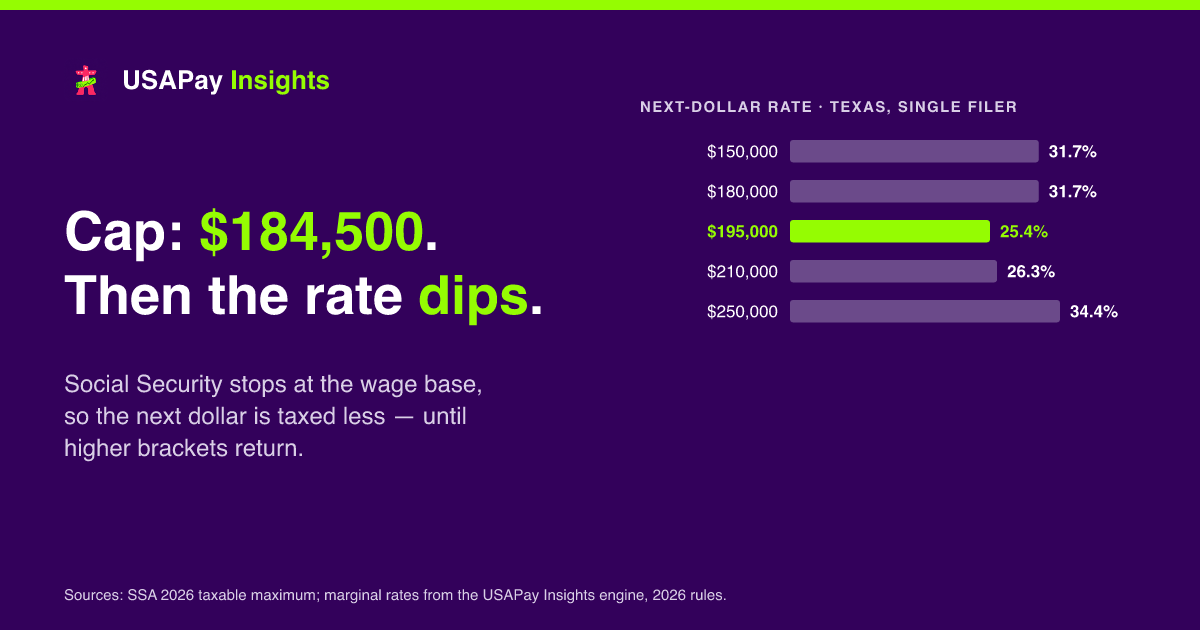
Crossing $184,500 has a visible effect on a paycheck: Social Security stops for the rest of the year, so take-home jumps mid-year without anything else changing.
To see it cleanly you have to compare two salaries inside the same federal bracket, otherwise a bracket step hides the effect. In Texas, a single filer on $180,000 faces a marginal rate of 31.7% on the next dollar. At $195,000 — same 24% federal bracket, still below the Additional Medicare threshold — it is 25.4%. The whole 6.2% difference is Social Security switching off.
It does not stay that low. Keep going and the effect reverses: by $250,000 the marginal rate is back up to 34.4%, because the federal bracket has stepped to 32% and the 0.9% Additional Medicare surtax has started above $200,000. Passing the wage base is a dip, not a permanent discount.
The Additional Medicare thresholds have never been indexed for inflation since they were introduced. The wage base rises every year; that threshold does not. Each year it therefore catches more people.
For 2027: SSA has set the base at $192,300. What that changes, salary by salary, is in the 2027 wage base article.
Sources: SSA, 2026 COLA announcement and Contribution and Benefit Base (retrieved 2026-10-25); marginal rates from this site's engine.
Calculate your own take-home pay
Any salary or hourly wage, all 50 states and DC, with city taxes and payroll deductions.
Use the free calculatorFrequently Asked Questions
What is the Social Security wage base for 2026?
What is the most Social Security tax I can pay in 2026?
Does my tax rate drop once I pass the wage base?
Useful calculators for this guide
Disclaimer: Figures are estimates of annual tax liability from published federal and state rules, not paycheck withholding, and not tax advice. Your own situation may differ.